Sport in Marylebone
Boxing in St Marylebone
It is hard to believe that the peaceful and idyllic Marylebone used to be a hub for Boxing, and indeed for some prize fighters and famous boxers.
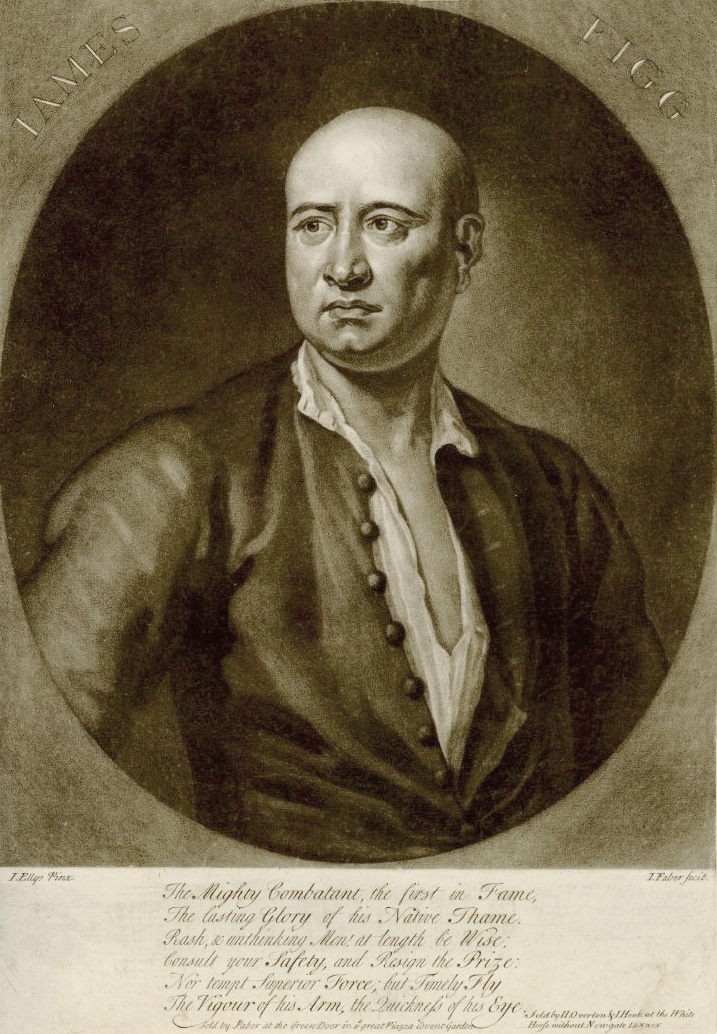
One of Marylebone’s most famous boxers was James Figg. Although little is known about the beginning of his life, he definitely made a name for himself in Marylebone… In the 1700s, Figg was discovered by the Earl of Peterborough – and under his patronage Figg was able to open his own arena in Marylebone where he taught other fighters, called Figg’s Amphitheatre or the Boarded House. These fights were not only between men and women – sometimes animals were involved, in 1721 there were reports of a match fought between a wild panther and 12 English dogs in Marylebone. Figg ended his fighting career in the 1730s but his name lived on in teaching and his arena. He died on 7 December 1734 and was buried in St Marylebone Parish Churchyard.
Boxing remained an important part of Marylebone, and in the 1920s and ’30s it boasted one of Britain’s top boxing gyms, run by one of the country’s leading trainers. The self-styled ‘Professor’ Andrew Newton, a two-time ABA champion, ran the Empire School of Arms at 241 Marylebone Road, training amateur and pro boxers there from 1907 until his death in 1940.
One famous name to come out of it was a teenage boy, ‘Nipper’ Pat Daly. Daly lived and trained in Marylebone and began professionally boxing at ten years old – it appeared he had incredible potential and at 14 he left school to box full-time. He spent his teenage years winning championships and was on path for amazing career, unfortunately at an early age he was overworked and had to retire at 17/18.
Another famous Marylebone boxer was one of London’s, and perhaps the UK’s first, female Boxer, Annie Newton. Newton at a young age enjoyed Boxing and began appearing in stage shows and fairground tents, where she would fight men to raise money for various charities. Her 14 year boxing career saw her fight men and women – which included a boxing scandal when she was banned from boxing by the Home Secretary as they did not think it was a suitable sport for women.
Learn learn more in our sources here: Annie Newton, St Marylebone Society and Thames History.